
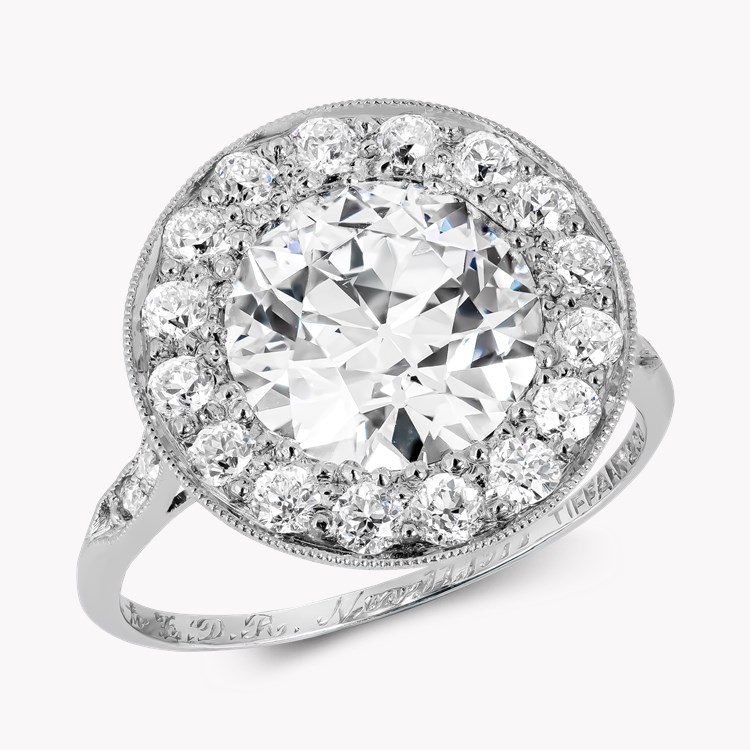
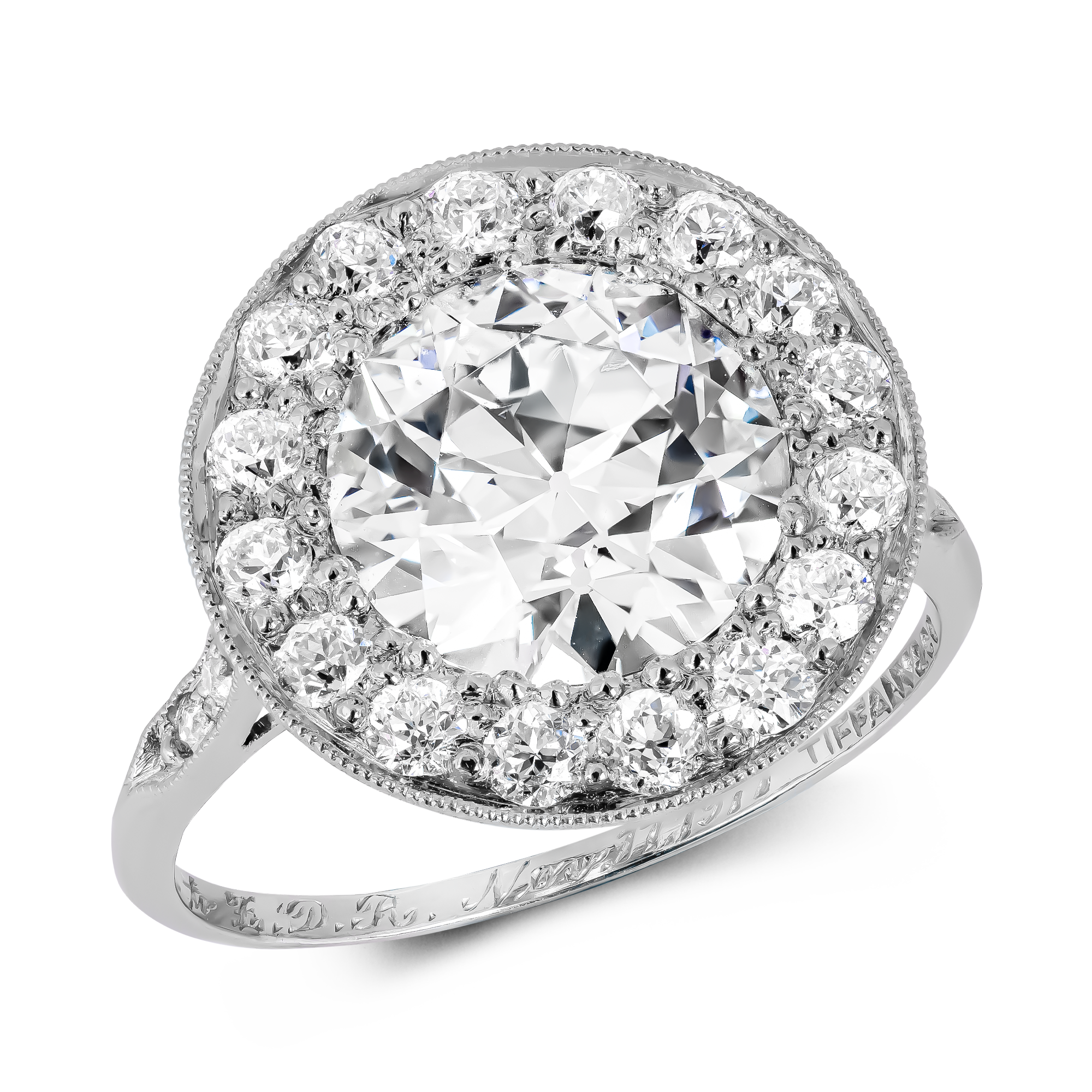

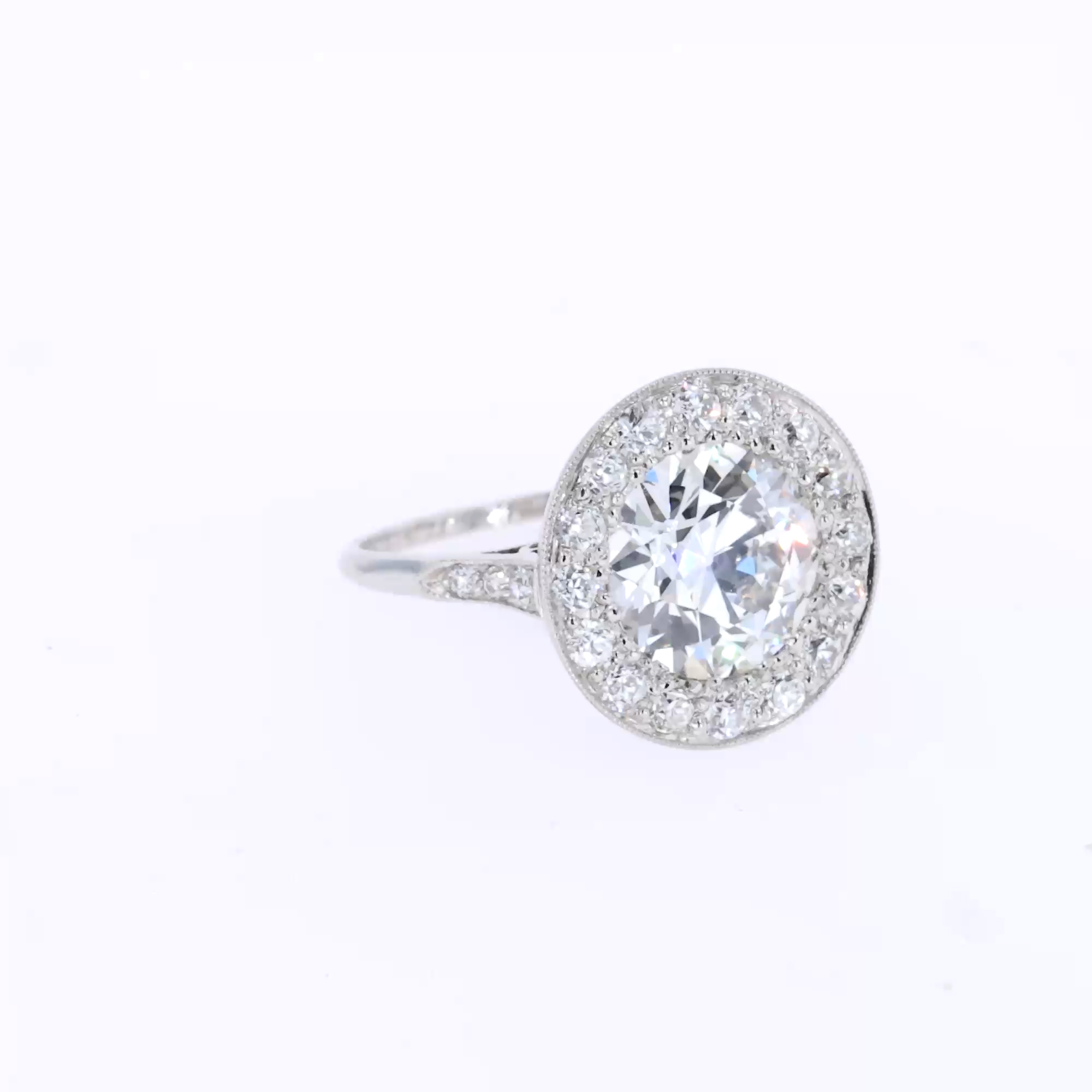
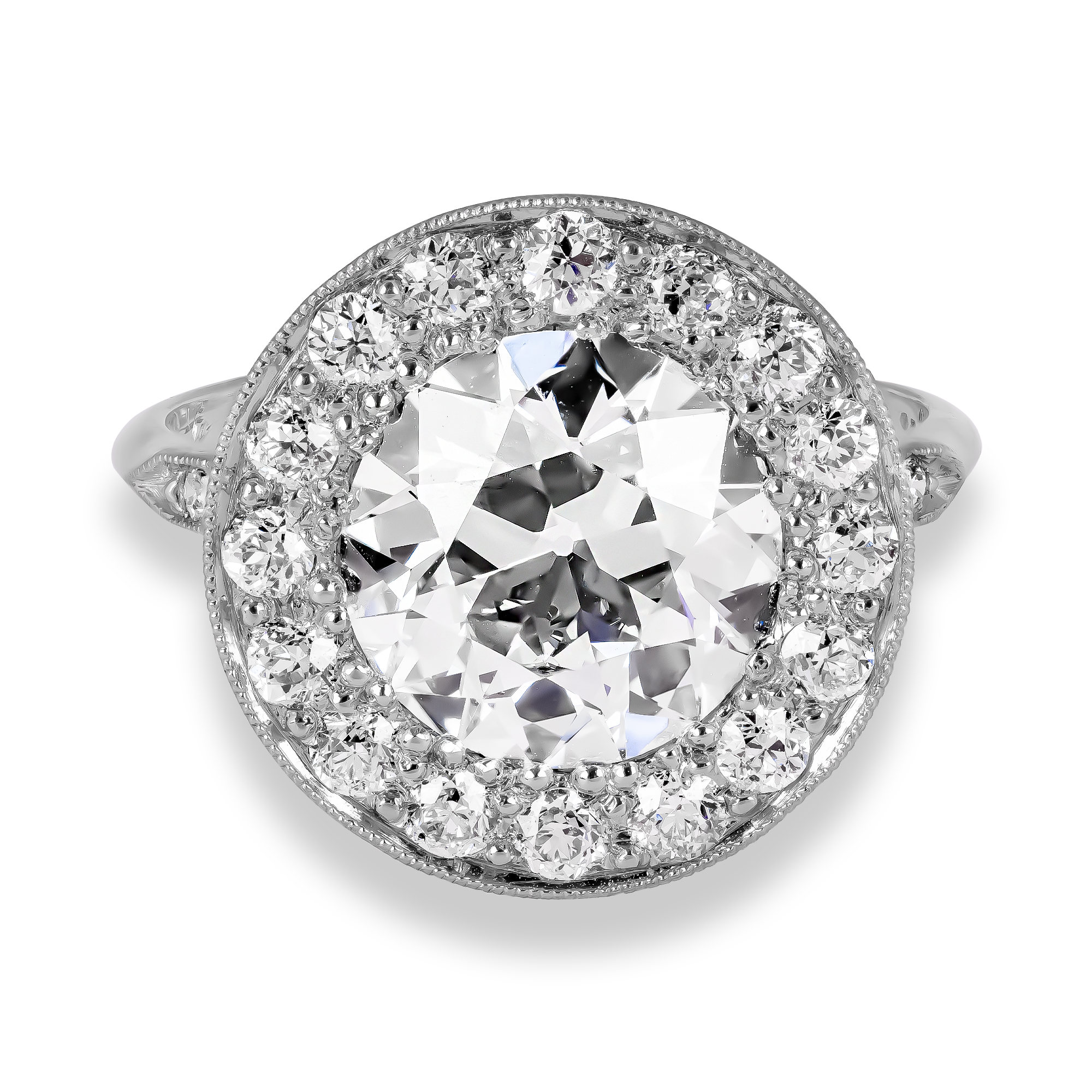

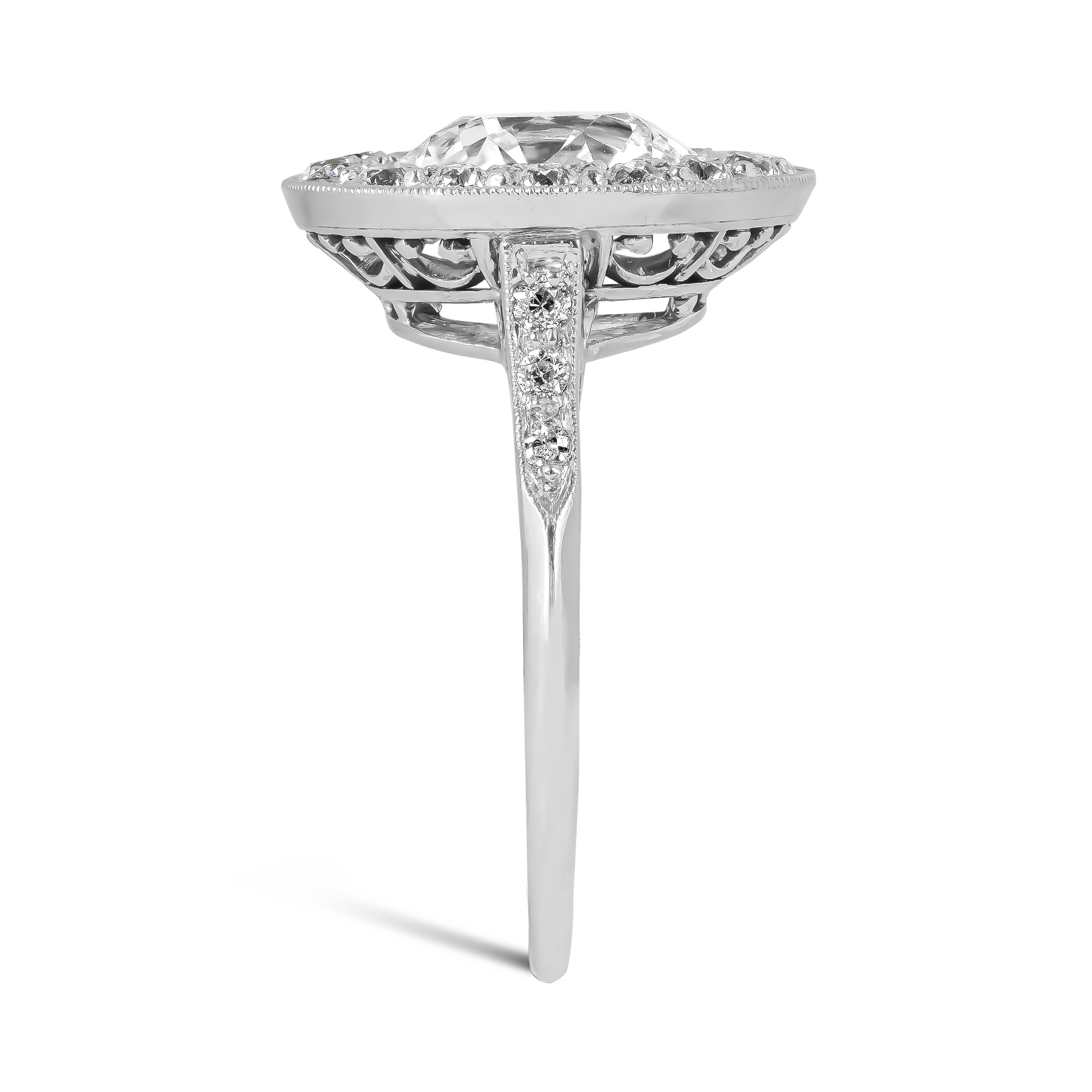
Early Art Deco Tiffany & Co. 2.67ct Diamond Cluster Ring in Platinum

Old European Cut, Grain set
Check Specifications for ring size details. If you require information about the resizing options available on this ring, please enquire for details.
Description
A glorious early Art Deco diamond ring by the House of Tiffany & Co (c. 1911). A central old European cut diamond (2.67ct) has been securely grain set into lustrous platinum and surrounded by a halo of smaller old cut diamonds (0.55ct). Intricate millegrain detailing completes the design with further diamonds set into the top sections of each shoulder. Dating to around 1911 this ring would have been a greatly treasured and flaunted jewel worn with pride and joy during the social exuberance of the period. An original engraved presentation inscription inside the shank confirms this. A byword for American luxury, Tiffany & Co was founded in 1837 and became a favoured establishment for the supremely wealthy industrialists of the Gilded Age. The house was at its peak when it was owned and run by the family from 1837-1999. This superb, signed ring is a perfect example of the wonders of the period, and will make an extra special engagement ring to be worn and enjoyed.
Specifications
| Creator | Tiffany |
| Material | Platinum |
| Principal Stone | Diamond |
| Principal Stone Shape i | Old |
| Princip Stone Weight i | 2.67 |
| Principal Dia Colour i | Est F/G |
| Princip. Dia Clarity i | Est VVS |
| Number of Gemstones | 23 |
| Total Weight i | 3.22 |
| handmade in i | United States |
| Age | 1911 - 1940 (Art Deco) |
| Ring Width | 0.9mm |
| Ring Size | L |
| PRAGNELL REFERENCE | 0154367 |
The Pragnell Difference

Complimentary Delivery
We offer complimentary delivery on all our items and next-day delivery where possible.
LEARN MORE
After-Care & Upkeep
Our range of after-care services include jewellery restoration, resizing, polishing and more.
LEARN MORE
Bespoke Services
Our experts will work with you to create a unique piece of jewellery, custom-made for you.
LEARN MORE
Redesigning Jewellery
We can redesign your old jewellery into wearable pieces that you'll enjoy for a lifetime.
LEARN MOREAntique Product Page